Every Processor Has A Hidden Profit Centre
Most processors know where their profit comes from.
Or at least they think they do.
Ask where the biggest opportunities exist and you'll hear familiar answers.
“Increase throughput, reduce labour, negotiate better crop pricing, lower utility costs, improve efficiency….”
All important points, yet many of the most profitable improvements don't come from reducing costs.
They come from recovering value, value that is often already moving through the factory.
The Profit Centre Nobody Talks About
Every business has profit centres. Sales teams generate revenue. Production teams create output. Procurement teams influence purchasing costs.
But there is another profit centre hiding inside most processing facilities.
Yield.
Not theoretical yield, actual product recovery. The amount of purchased crop that ultimately becomes saleable product.
Unlike many profit improvement initiatives, yield recovery doesn't require finding new customers, new markets, or increasing production volumes.
It simply requires retaining more value from the product already being processed.
The Difference Between Buying And Keeping
Processors spend significant effort buying or growing crops efficiently, and raw material costs matter.
But once the crop enters the facility, the story changes. Attention shifts towards throughput, labour, Schedules, equipment performance and production targets.
The challenge is that value can quietly leave the process at every stage via additional handling, wider trim than necessary, inconsistent cut, and process variation between operators.
The financial impact isn't usually dramatic - But it's cumulative.
And cumulative losses are surprisingly powerful when taken over a series of small decisions repeated thousands of times each day.
Why Yield Improvements Compound
When handling thousands of heads every day in an efficient operation, the line hits its targets, customers are happy and everything appears to be under control.
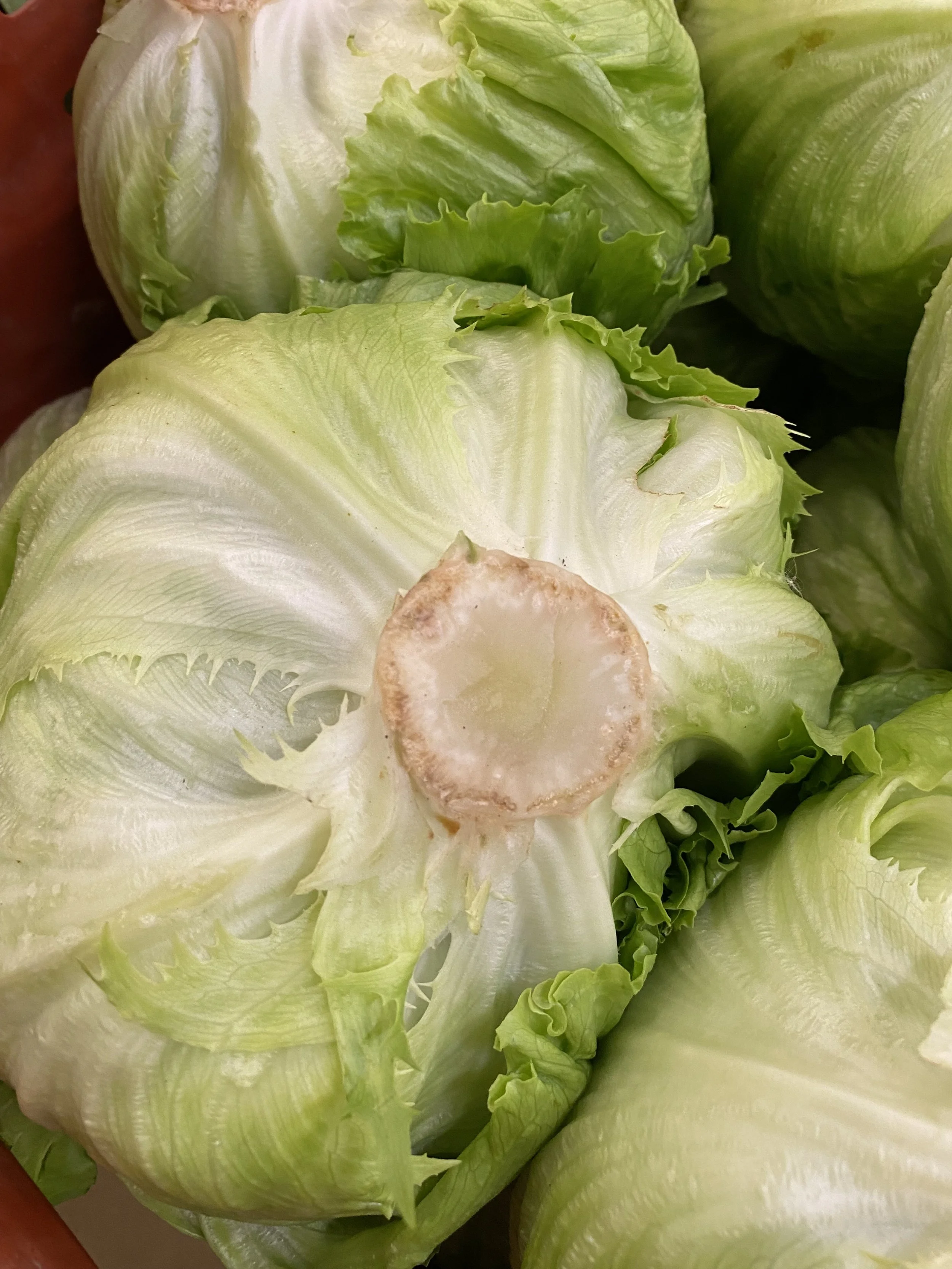
Now imagine recovering just a little more product from each lettuce.
Not enough to notice visually. Not enough to trigger concern. Just slightly more product making it into the final pack.
When that improvement is repeated on every lettuce. every pallet, every shift and every day……..Suddenly a small operational improvement becomes a meaningful commercial move.
This is why yield recovery is different from many cost reduction projects. The benefit compounds with every unit processed.
We explored this idea further in The Most Expensive Waste In Your Factory Is Probably The One You Don't Measure, where we look at how small process variations can quietly become significant financial losses.
The Psychology Of Accepted Losses
One reason yield opportunities are often overlooked is surprisingly simple - People become familiar with them.
The first time a process creates waste somebody notices, the thousandth time, it becomes routine.
By default, things that become routine stop attracting attention, and eventually accepted losses become so embedded within operations for years without challenge, that nobody sees them anymore.

Make the cut create value
Why Labour Dominates The Conversation
Labour deserves attention. The food industry continues to face significant labour challenges in areas like recruitment, retention, training, availability etc;
but labour also has something else.
Visibility.
Payroll arrives every month, managers discuss staffing on a daily basis, and labour shortages create immediate operational challenges.
Yield loss behaves differently. No invoice arrives, no alarm sounds and no obvious event occurs.
Product simply vanishes, and never becomes saleable product. That makes yield one of the least visible but potentially most valuable areas for improvement.
Throughput Versus Value
The food industry often rewards speed. Faster lines. Higher capacity. More output.
But speed and value are not the same thing. A line can process product quickly and still be sacrificing recoverable product, a factory can achieve production targets while still leaving unrecognised margin behind.
The highest-performing processors understand this distinction - They don't just move product, they maximise value recovery, because the objective is to process better.
Consistency Creates Profitability
Consistency is where profitability begins. Consistent processes create predictable outcomes.
Predictable outcomes facilitate reliable planning, in turn this improves operational performance.
In fresh produce processing, consistency influences:
Yield
Product quality
Shelf life
Labour efficiency
Throughput stability
Every reduction in variation creates opportunity. This is one reason automation continues to gain attention throughout the industry. Modern robotic de-coring systems are increasingly being used to reduce variability, improve consistency and recover more saleable product from every crop.
Not just because machines are faster (they are!), but because consistency is valuable.
Looking At Yield Differently
Yield is an important production metric, and processors view yield as a strategic metric….in reality, it’s a direct reflection of value recovery.
A measurement of how effectively the ready to eat operation converts grown or purchased crop into saleable product.
When viewed this way, yield stops being only a production statistic - It becomes a profitability indicator.
The Opportunity Hiding In Plain Sight
Most businesses search for growth externally.
New customers.
New products.
New markets.
But sometimes the most attractive opportunities already exist inside the operation waiting to be noticed.
Fresh produce processors purchase value every day.
The question is how much of that value reaches the customer.
Because every processor has a hidden profit centre, in many cases, it's already moving down the conveyor.
Processors who understand this don't just focus on what they grow or buy in isolation, they expand their focus on what they keep.